
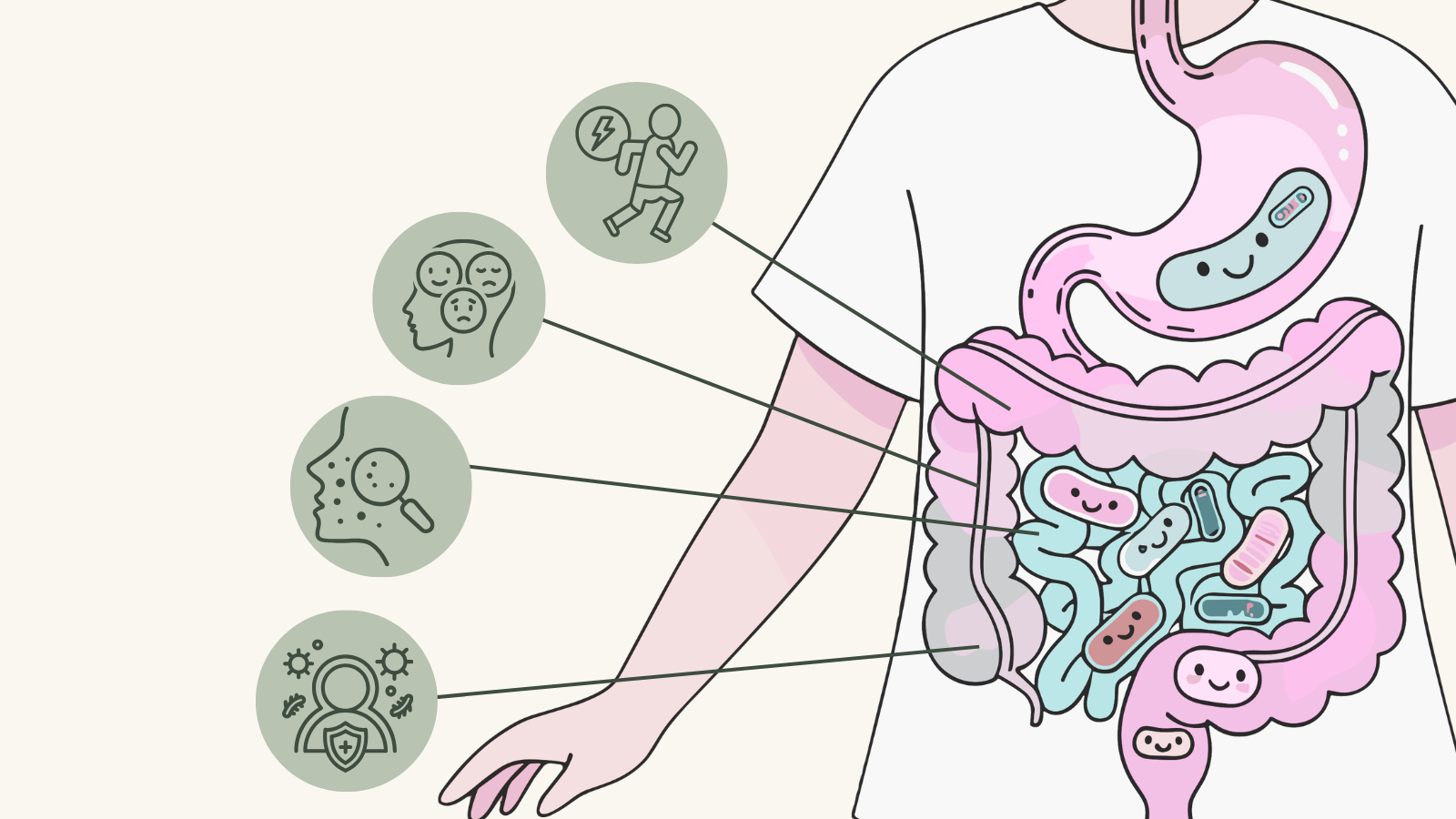
Maybe you came looking for answers about your energy. Or your mood, your skin, or the way you seem to catch every cold that goes around. Then someone asked about your digestion, and you thought, "My stomach is fine. That's not why I'm here."
It's a fair reaction. But there's a good reason so many conversations about health circle back to the gut. It touches nearly every system in the body, and when it isn't working well, the effects often show up far from your stomach.
Your gut does far more than digest food
Most of us think of digestion as a simple process. Food goes in, nutrients get absorbed, and the rest moves on. In reality, the gut is one of the busiest places in the body.
It's where you break down food and absorb the vitamins and minerals your cells depend on. It's home to trillions of microbes, often called the gut microbiome, that help digest fiber, make certain vitamins, and talk with your immune system. It's also lined with nerves that stay in constant contact with your brain.
So when something is off in the gut, it rarely stays in the gut.
How digestion connects to the rest of you
Energy
Feeling tired all the time has many possible causes. One that's easy to overlook is how well you're absorbing what you eat.
You can eat a thoughtful, balanced diet and still run low on nutrients like iron, vitamin B12, or magnesium if digestion isn't doing its job. Low stomach acid, inflammation in the gut lining, and some medications can all affect absorption. When the raw materials for energy aren't getting through, fatigue can follow.
Mood and focus
Your gut and brain are connected by a two-way communication system, sometimes called the gut-brain axis. Signals travel along nerves, through hormones, and through substances your gut microbes produce.
You've probably felt this connection already: butterflies before a big moment, or an upset stomach during a stressful week. It works in the other direction too. Ongoing digestive trouble can affect how you feel, think, and cope. Researchers are still learning exactly how this works, but the connection itself is well recognized.
Skin
Skin is often one of the first places the body shows that something deeper is going on. Researchers are exploring links between gut health and skin concerns like acne, eczema, and rosacea. The science here is still developing, but for some people, supporting digestion is one helpful piece of a bigger picture.
Immunity
A large share of your immune system lives in and around your digestive tract. That makes sense when you think about it. Every meal brings in something from the outside world, and your gut has to decide what is helpful and what isn't.
When the gut lining and the microbes that live there are in good shape, the immune system can respond in balanced ways. When they're under strain, the immune system may become more reactive. That can show up as frequent illness, food sensitivities, or symptoms that seem to come and go without a clear reason.
The gut lining also makes an enzyme called DAO (diamine oxidase), which helps break down histamine from food. That's one reason digestive health and histamine-related symptoms, like flushing or reacting to aged foods, are often connected.
Why "start with the gut" doesn't mean "it's all in your gut"
Starting with the gut is not a claim that every health concern begins there. Your story is more complicated than that, and it deserves to be treated that way.
Hormones, stress, sleep, genetics, and life circumstances all play a role. But the gut is often a practical place to begin for a few reasons:
- It affects so much else. Supporting digestion can make it easier for other changes, like better sleep or steadier energy, to take hold.
- It responds to everyday choices. What, when, and how you eat are things you can start working with right away.
- It helps make sense of the rest. Once digestion is steadier, it becomes easier to see what other patterns remain and what deserves a closer look.
Think of it as clearing the ground before you build. It doesn't solve everything, but it makes the next steps clearer.
What starting with the gut can look like
There's no single gut protocol that works for everyone. Two people with similar symptoms can have very different things going on underneath. That's why the first step is listening, not prescribing.
Getting started often means looking at things like:
- Your patterns. When do symptoms show up? After certain foods, at certain times of day, during stressful stretches? A simple food and symptom journal can reveal a lot.
- How you eat, not just what you eat. Rushed meals, eating while stressed, and not chewing well can all affect digestion.
- Variety. A range of plant foods feeds a range of gut microbes. Some people need to build up slowly, especially if certain foods tend to bother them.
- Stress and rest. Digestion works best when your body feels safe enough to slow down.
Sometimes it helps to look deeper with testing, such as an organic acids test, to understand what's happening beneath the surface. Testing can add useful detail, but it works best alongside your story, not in place of it. You can read more about how I work with clients and how the Discovery: Energy, Gut, and Mood assessment fits into that process.
If you're noticing blood in your stool, unexplained weight loss, ongoing abdominal pain, trouble swallowing, or a big change in your bowel habits, please talk with your healthcare provider first. Those symptoms deserve prompt medical attention.
A place to begin, not a place to stay
If you've been tired, foggy, or reactive for a while, it's natural to want a single answer. The gut usually isn't the whole answer, but it is very often a good place to start listening.
You don't have to figure it all out at once. Sometimes the most helpful thing is simply to begin paying attention to how your body responds, with curiosity instead of frustration. From there, the next step tends to become a little clearer.